
Alignment Chart 5E
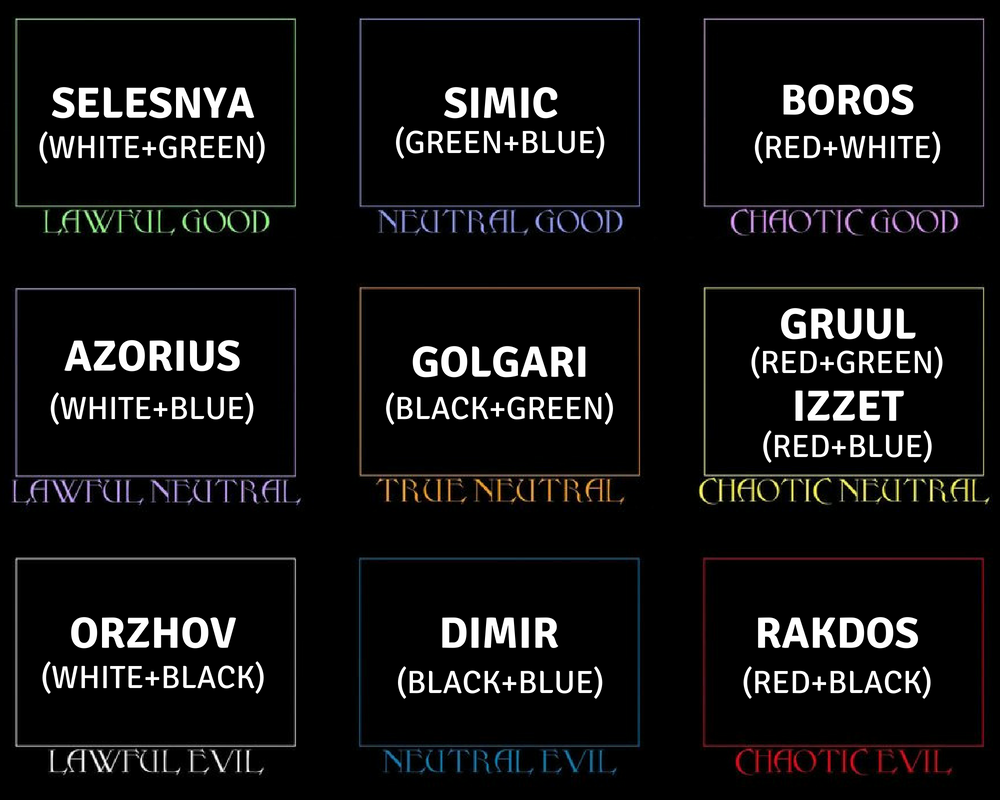
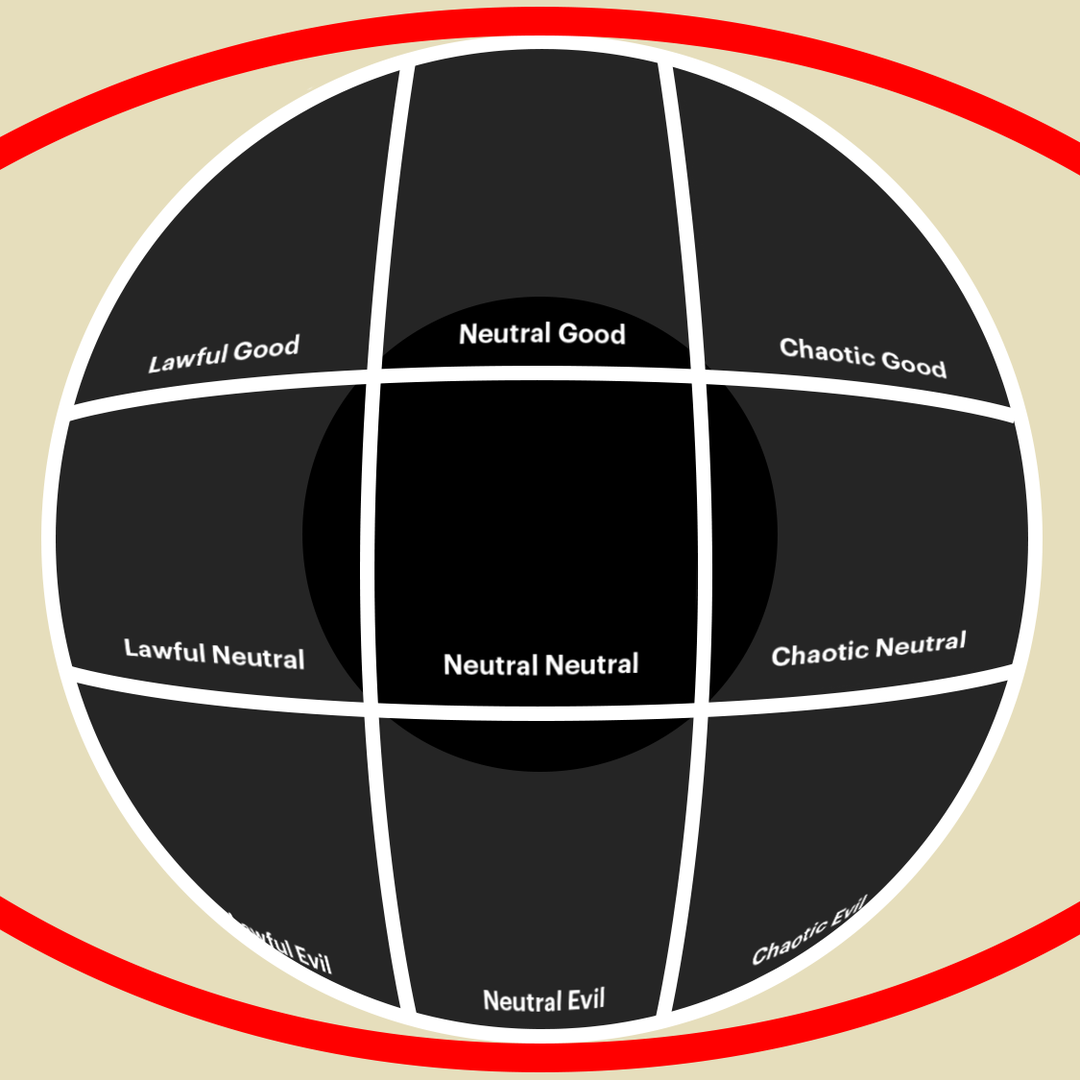
Alignment Chart 5E - Thus, nine distinct alignments define the possible combinations. Web alignment is a tool for developing your character's identity. Alignments greatly influence how player characters and npcs will interact with the world and respond to events. How they view and interact with the world around them stems from their decisions and tendencies. Good characters care about other people, will. Is a way to understanding why they do what they do, what moves them to do that, and what you can expect from them. Web a typical creature in the game world has an alignment, which broadly describes its moral and personal attitudes. Web in dungeons and dragons, there are nine different alignments to choose from. Web alignment is a combination of two factors: Thus, nine distinct alignments define the possible combinations. The nine dungeons and dragons alignments are: Characters that fall in this alignment. It is not a straitjacket for restricting your character. The lawful good alignment is a lot of what it sounds like. One identifies morality (good, evil, or neutral), and the other describes attitudes toward society and order (lawful, chaotic, or neutral). Web in dungeons and dragons, there are nine different alignments to choose from. Most versions of the game feature a system in. One identifies morality (good, evil, or neutral), and the other describes attitudes toward society and order (lawful, chaotic, or neutral). Web we’ll explore the meaning behind the alignment system, the philosophical and moral implications, the mechanical aspects, what 5e’s alignment system does well, what it does poorly, and what we can do to make 5e’s alignment system useful without being stifling or problematic. Web alignment is a tool for developing your character's identity. Web in dungeons and dragons, there are nine different alignments to choose from. One identifies morality (good, evil, or neutral), and the other describes attitudes toward society and order (lawful, chaotic, or neutral). Thus, nine distinct alignments define the possible combinations. Web alignment is a tool for developing your character's identity. Within the game, alignment is generally approached in one. It is not a straitjacket for restricting your character. Or as a larger force in the setting's cosmology, dictating power struggles against the opposing sides. One identifies morality (good, evil, or neutral), and the other describes attitudes toward society and order (lawful, chaotic, or neutral). In addition, few people are completely consistent. Web what is alignment? This produces the following chart, which you may find familiar. Thus, nine distinct alignments define the possible combinations. These characters are guided by a strict moral code and believe in using their abilities and power to. Each describes a character’s moral and personal attitudes. Web alignment is a combination of two factors: Each alignment is either lawful, neutral, or chaotic as well as being either good, neutral, or evil. Web alignment is a combination of two factors: One identifies morality (good, evil, or neutral), and the other describes attitudes toward society and order (lawful, chaotic, or neutral). Thus, nine distinct alignments define the possible combinations. These characters are guided by a strict. Within the game, alignment is generally approached in one of two ways: The nine dungeons and dragons alignments are: Web what is alignment? One identifies morality (good, evil, or neutral), and the other describes attitudes toward society and order (lawful, chaotic, or neutral). One identifies morality (good, evil, or neutral), and the other describes attitudes toward society and order (lawful,. Web we’ll explore the meaning behind the alignment system, the philosophical and moral implications, the mechanical aspects, what 5e’s alignment system does well, what it does poorly, and what we can do to make 5e’s alignment system useful without being stifling or problematic. One identifies morality (good, evil, or neutral), and the other describes attitudes toward society and order (lawful,. Chaotic neutral can be a dangerous alignment when it seeks to eliminate all authority, harmony, and order in society. Web what is alignment? Good characters care about other people, will. Web when you create a character for d&d, you’ll need to choose an alignment. Web dnd alignments in 5e. Within the game, alignment is generally approached in one of two ways: Alignment is a combination of two factors: The nine dungeons and dragons alignments are: One identifies morality (good, evil, or neutral), and the other describes attitudes toward society and order (lawful, chaotic, or neutral). Web alignment is a combination of two factors: Chaotic neutral can be a dangerous alignment when it seeks to eliminate all authority, harmony, and order in society. Web in dungeons and dragons, there are nine different alignments to choose from. Good characters care about other people, will. Web alignment is a tool for developing your character's identity. It is not a straitjacket for restricting your character. One identifies morality (good, evil, or neutral), and the other describes attitudes toward society and order (lawful, chaotic, or neutral). Most versions of the game feature a system in. In short, alignment is a reflection of your character’s morals and motivations. Alignments greatly influence how player characters and npcs will interact with the world and respond to events. Alignment is. Web we’ll explore the meaning behind the alignment system, the philosophical and moral implications, the mechanical aspects, what 5e’s alignment system does well, what it does poorly, and what we can do to make 5e’s alignment system useful without being stifling or problematic. Characters are defined by much more than their race and class. Dnd alignment 5e is best visualized by an alignment chart and works along two axes: As an indicator of a character's personal worldview; How they view and interact with the world around them stems from their decisions and tendencies. One identifies morality (good, evil, or neutral), and the other describes attitudes toward society and order (lawful, chaotic, or neutral). These characters are guided by a strict moral code and believe in using their abilities and power to. This produces the following chart, which you may find familiar. Web a typical creature in the game world has an alignment, which broadly describes its moral and personal attitudes. Each describes a character’s moral and personal attitudes. Web alignment is a combination of two factors: Within the game, alignment is generally approached in one of two ways: Thus, nine distinct alignments define the possible combinations. It is not a straitjacket for restricting your character. One identifies morality (good, evil, or neutral), and the other describes attitudes toward society and order (lawful, chaotic, or neutral). Or as a larger force in the setting's cosmology, dictating power struggles against the opposing sides.
Alignment chart of things my character said during my D&D 5e Campaign
Dnd 5e Alignment Chart vrogue.co
Dnd 5e Alignment Chart

Alignment Chart Dnd 5e Online Shopping

Dnd Alignment Chart Explained
Dnd 5e Alignment Chart
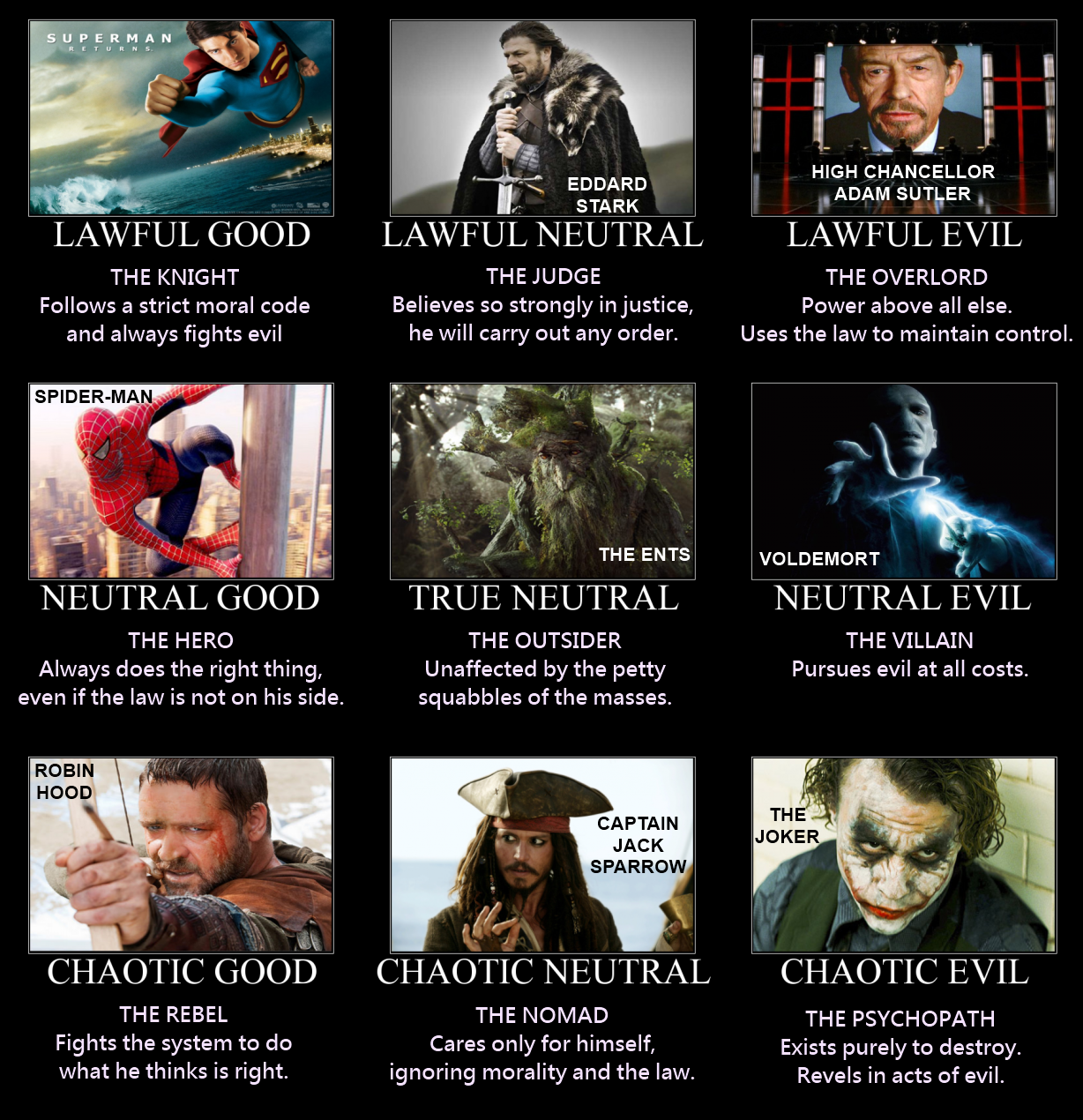
DnD Alignments 5e dicegeeks

Dnd 5e Alignment Chart
Dnd 5e Alignment Chart
Dnd 5e Alignment Chart
Lawful To Chaotic And Good To Evil.
Web When You Create A Character For D&D, You’ll Need To Choose An Alignment.
But How Do You Play D&D Alignments Convincingly?
Above, You’ll See Your Possible Alignment Options.
Related Post: