
Blooms Verbs Chart
Blooms Verbs Chart - Knowledge, comprehension, application, analysis, synthesis, and evaluation. Web bloom’s taxonomy of measurable verbs benjamin bloom created a taxonomy of measurable verbs to help us describe and classify observable knowledge, skills, attitudes, behaviors and abilities. Remembering, understanding, applying, analyzing, evaluating, and creating. Web the following tables offer a list of verbs representing a hierarchy of learning levels from basic knowledge to the highest level of creativity. Lower order thinking higher order thinking. Web additional information about bloom’s revised taxonomy is available here: It categorizes learning objectives into six levels, from simpler to more complex: Discover a list of action verbs that you can use to form learning objectives. The following is a list of measurable action verbs that can be used when you are creating your learning objectives. Use the chart to help formulate effective learning objectives for your educational events. Designing, constructing, planning, producing, inventing. Web benjamin bloom created a taxonomy of measurable verbs to help us describe and classify observable knowledge, skills, attitudes, behaviors and abilities. Act change behavior develop code of behavior develop philosophy. Knowledge, comprehension, application, analysis, synthesis, and evaluation. The theory is based upon the idea that there are levels of observable actions that indicate something is happening in the brain (cognitive activity.) by creating learning objectives using. Lower order thinking higher order thinking. The framework elaborated by bloom and his collaborators consisted of six major categories: Web additional information about bloom’s revised taxonomy is available here: In 1956, benjamin bloom with collaborators max englehart, edward furst, walter hill, and david krathwohl published a framework for categorizing educational goals: As teachers we tend to ask questions in the knowledge catagory 80% to 90% of the time. Ask choose follow accept responsibility answer assist be willing to. Web learn what bloom’s taxonomy is and the differences between original vs. Act change behavior develop code of behavior develop philosophy. Web bloom’s taxonomy provides a list of action verbs based on each level of understanding. This table of verbs lists cognitive processes that fit into bloom’s six categories and. Speech, stories, drama, cartoons, diagrams, graphs, summaries, outlines, analogies, posters, bulletin boards. Lower order thinking higher order thinking. The theory is based upon the idea that there are levels of observable actions that indicate something is happening in the brain (cognitive activity.) Designing, constructing, planning, producing, inventing. Associate with assume responsibility believe in be convinced give hold select show interest. Act change behavior develop code of behavior develop philosophy. The theory is based upon the idea that there are levels of observable actions that indicate something is happening in the brain (cognitive activity.) by creating learning objectives using. Speech, stories, drama, cartoons, diagrams, graphs, summaries, outlines, analogies, posters, bulletin boards. Web comparing, translating, interpreting, giving descriptions, and stating main ideas.. Web benjamin bloom created a taxonomy of measurable verbs to help us describe and classify observable knowledge, skills, attitudes, behaviors and abilities. Designing, constructing, planning, producing, inventing. The following is a list of measurable action verbs that can be used when you are creating your learning objectives. Remembering, understanding, applying, analyzing, evaluating, and creating. Discover a list of action verbs. Web the chart below arranges bloom's levels of cognitive activity from simple to complex and lists verbs that correspond to each level. Solve problems to new situations by applying acquired knowledge, facts, techniques and rules in a different way. Before we unleash the power of these verbs, a quick refresher on bloom’s taxonomy is in order. Each of the three. Adhere to alter arrange classify combine. Appraise, argue, assess, attach, choose compare, defend estimate, judge, predict, rate, core, select, support, value, evaluate. Web revised bloom's taxonomy chart. Web the chart below arranges bloom's levels of cognitive activity from simple to complex and lists verbs that correspond to each level. Web bloom’s taxonomy is a hierarchical model of cognitive skills in. Solve problems to new situations by applying acquired knowledge, facts, techniques and rules in a different way. This table of verbs lists cognitive processes that fit into bloom’s six categories and help identify the cognitive complexity or the order of thinking. Make inferences and find evidence to support generalizations. It categorizes learning objectives into six levels, from simpler to more. Web bloom's taxonomy verbs include evaluate: Ask choose follow accept responsibility answer assist be willing to. Knowledge, comprehension, application, analysis, synthesis, and evaluation. Web the following tables offer a list of verbs representing a hierarchy of learning levels from basic knowledge to the highest level of creativity. The theory is based upon the idea that there are levels of observable. Ask choose follow accept responsibility answer assist be willing to. Web bloom’s taxonomy provides a list of action verbs based on each level of understanding. The framework elaborated by bloom and his collaborators consisted of six major categories: Web bloom’s taxonomy of measurable verbs benjamin bloom created a taxonomy of measurable verbs to help us describe and classify observable knowledge,. Act change behavior develop code of behavior develop philosophy. Ask choose follow accept responsibility answer assist be willing to. Web the following tables offer a list of verbs representing a hierarchy of learning levels from basic knowledge to the highest level of creativity. In 1956, benjamin bloom with collaborators max englehart, edward furst, walter hill, and david krathwohl published a. The following is a list of measurable action verbs that can be used when you are creating your learning objectives. Web bloom’s taxonomy of measurable verbs benjamin bloom created a taxonomy of measurable verbs to help us describe and classify observable knowledge, skills, attitudes, behaviors and abilities. Generating new ideas, products, or ways of viewing things. Web what is bloom’s taxonomy? Make inferences and find evidence to support generalizations. Use the chart to help formulate effective learning objectives for your educational events. Ask choose follow accept responsibility answer assist be willing to. Designing, constructing, planning, producing, inventing. Web bloom's taxonomy verbs include evaluate: As teachers we tend to ask questions in the knowledge catagory 80% to 90% of the time. Web solve problems to new situations by applying acquired knowledge, facts, techniques and rules in a different way. Appraise, argue, assess, attach, choose compare, defend estimate, judge, predict, rate, core, select, support, value, evaluate. Lower order thinking higher order thinking. Associate with assume responsibility believe in be convinced give hold select show interest. Web the chart below arranges bloom's levels of cognitive activity from simple to complex and lists verbs that correspond to each level. The theory is based upon the idea that there are levels of observable actions that indicate something is happening in the brain (cognitive activity.) by creating learning objectives using.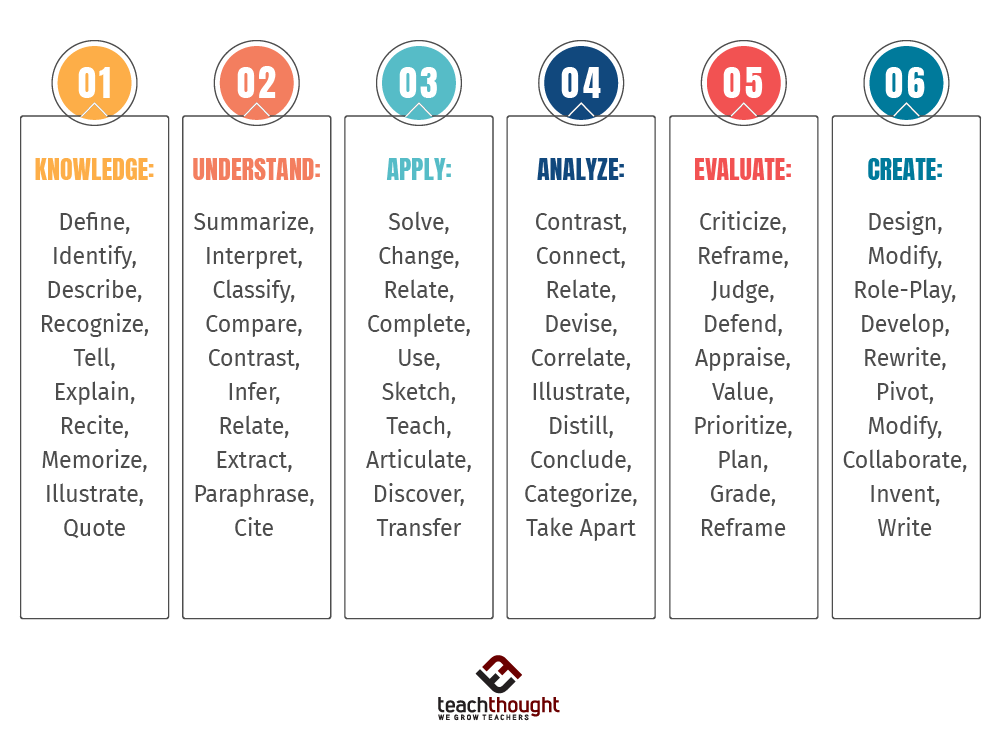
100+ Bloom’s Taxonomy Verbs For Critical Thinking

Printable Bloom's Taxonomy Verbs

Bloom's Taxonomy Virtual Library

Bloom's Taxonomy Verbs Free Classroom Chart
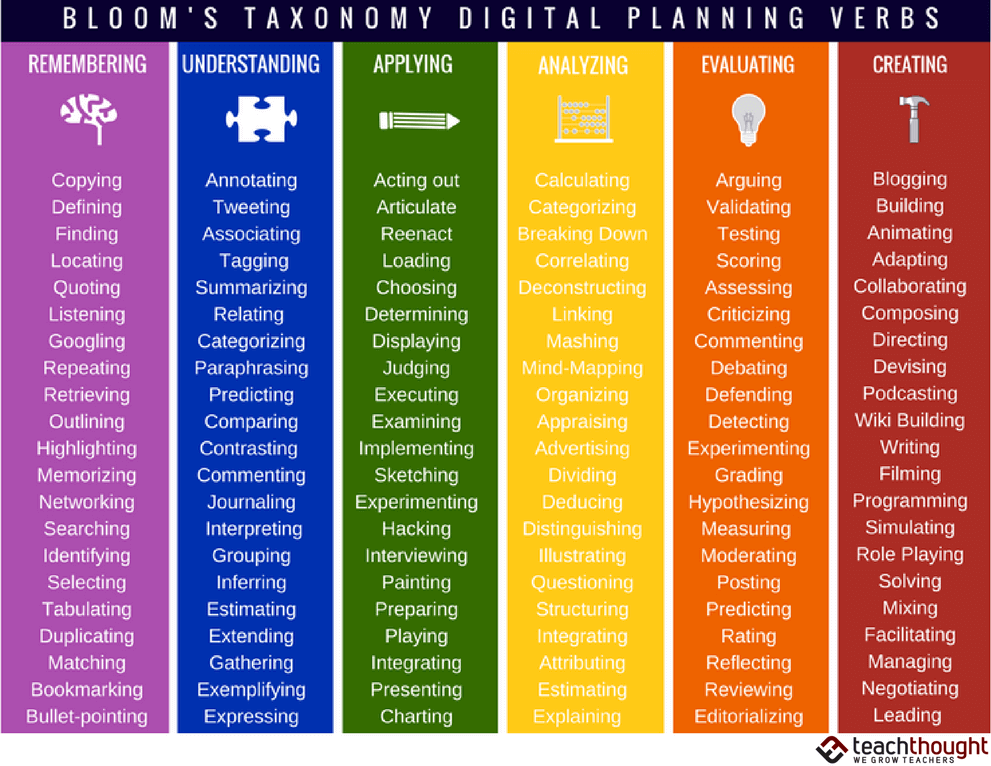
![Bloom's Digital Taxonomy Verbs [Infographic] 36239971987237262](https://i.pinimg.com/originals/da/ad/23/daad23c649df8a68ecd9d4f5bad049bd.png)
Bloom's Digital Taxonomy Verbs [Infographic] 36239971987237262
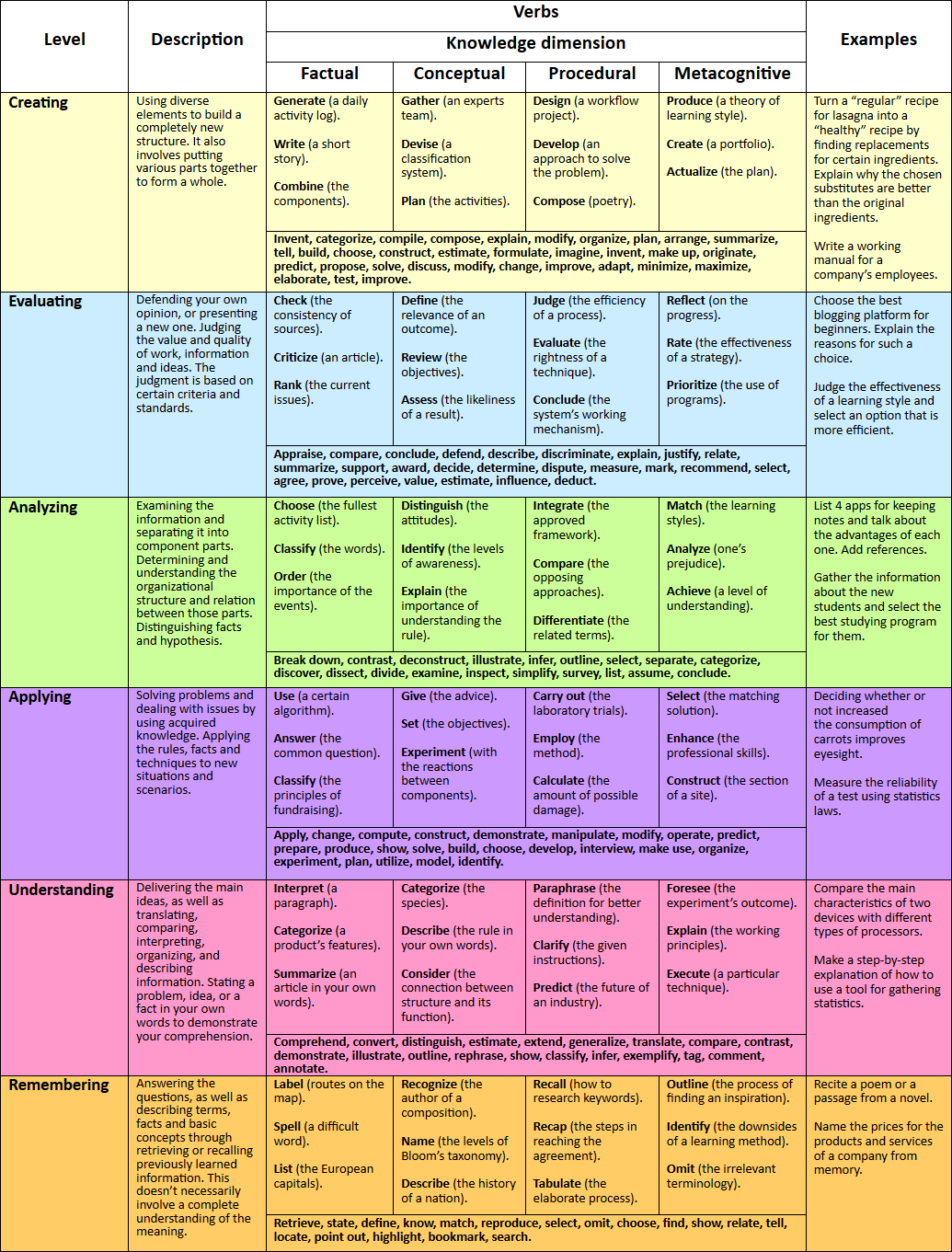
Bloom's Taxonomy 2024 Verbs, Chart, & How to Use This All

Printable Bloom's Taxonomy Verbs
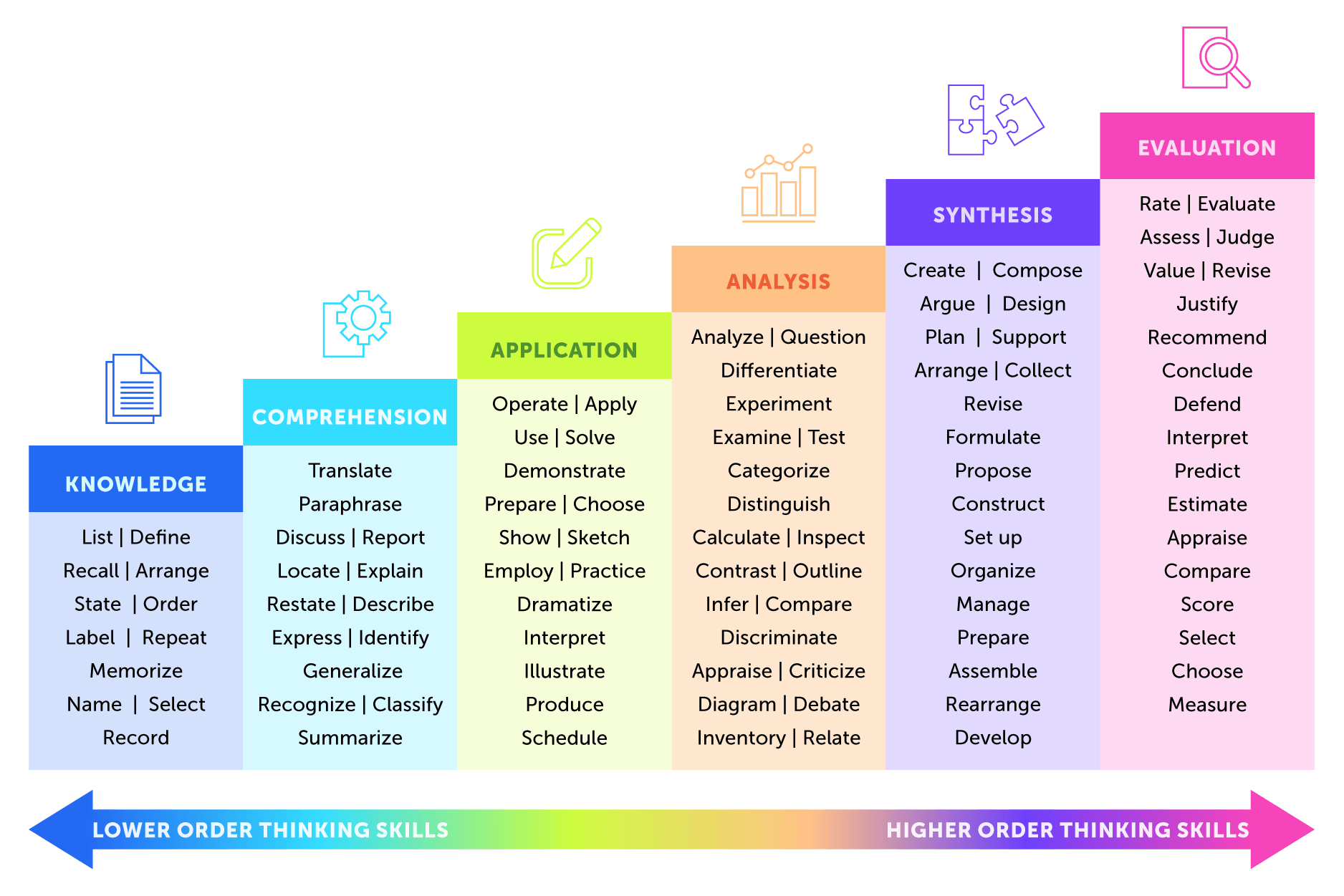
BLOOM'S TAXONOMY Sir Mar
Bloom S Taxonomy Verbs Free Classroom Chart Sexiz Pix

Bloom's Taxonomy Printable
These Questions Are Not Bad, But Using Them All The Time Is.
Web Comparing, Translating, Interpreting, Giving Descriptions, And Stating Main Ideas.
Web Bloom’s Taxonomy Is A Hierarchical Model Of Cognitive Skills In Education, Developed By Benjamin Bloom In 1956.
Web Revised Bloom's Taxonomy Chart.
Related Post: