
Brain Frequency Chart
Brain Frequency Chart - Each type of brain wave is associated with a different state of consciousness. Web through the advancement of neurological research, we are now able to accurately identify what frequency ranges our brainwaves are in, during certain mental states. The five brain waves in order of highest frequency to lowest are as follows: Web brain waves are measured by frequency, which is cycles per second, or hertz (hz), and they range from very slow to very fast. Web the six anatomical layers of the mammalian brain cortex show distinct patterns of electrical activity which are consistent throughout the entire cortex and across several animal species, including humans, an mit study has found. Web brain wave frequency chart: Beta brain waves are involved in logical thinking, conscious thought and concentration. Web at a glance, here are some of the benefits and functions associated with key brainwave frequencies. Throughout the day your brain will utilise certain waves to process certain situations. This brainwave frequency chart explains gamma, beta, alpha, theta, and delta waves. While sleeping or meditating, the amount of beta waves decreases. These waves occur during strong mental activities such as studying and solving problems. Dominant brainwave in infants under one year old. Web according to a recent definition, brain states are “recurring activity patterns distributed across the brain that emerge from physiological or cognitive processes”. Electrodes are placed on specific sites on the scalp to detect and record the electrical impulses within the brain. Web the chart below shows the brainwave eeg (electroencephalography) graphs of the four major levels of brainwaves, their respective brainwave frequencies and their corresponding states of mind. Web the dominant frequency they communicate with each other determines our brainwave state. Alpha waves, which measure between 8 and 12 hz, occur when people feel. Increased energy levels, focus, alertness and clear thinking; A frequency is the number of times a wave repeats itself within a second. Here’s a look at our different brain waves and what scientific studies have taught us about their features and characteristics: These waves occur during strong mental activities such as studying and solving problems. Delta waves, which are between 0.5 and 4 hertz (hz), occur during deep states of dreamless sleep. Each type of brain wave is associated with a different. Delta waves, which are between 0.5 and 4 hertz (hz), occur during deep states of dreamless sleep. They can be increased through meditation and mindfulness. Alpha, beta, delta, and theta. Discover innovative tools like the muse 2 headband and the muse s headband that revolutionize brain training for enhanced focus. Web the chart below shows the brainwave eeg (electroencephalography) graphs. The five brain waves in order of highest frequency to lowest are as follows: Your brain produces theta waves when you’re drifting off to sleep or just before you wake up. Beta waves occur when you are active and allow you to concentrate. Web according to a recent definition, brain states are “recurring activity patterns distributed across the brain that. By amplifying the brainwave synchronization effects, deep carrier frequencies allow you to achieve a far deeper level of meditation, quickly, safely and easily. They are often compared to musical notes since each type of brain wave has its own “sound,” which is distinct from others. Web through the advancement of neurological research, we are now able to accurately identify what. Throughout the day your brain will utilise certain waves to process certain situations. Alpha brain waves are most present when we are awake and relaxed. Web these smooth, oscillating sine wave frequencies enhance your mind’s ability to relax into a quiet and peaceful meditative state. Web by measuring thousands of neurons along the surface, or cortex, of the brain in. Web there are five main types of brainwaves that occur at various stages of brain activity. Beta waves occur when you are active and allow you to concentrate. There are five different types of brainwaves. Dominant brainwave in infants under one year old. While sleeping or meditating, the amount of beta waves decreases. Web like musical sounds, different states of mind are defined by distinct, characteristic waveforms, recognizable frequencies and rhythms in the electrical field of the brain. When there is an excess of these types of waves, you experience stress. Getting to know the 5 frequencies. Web there are 5 types of brain waves — alpha, beta, gamma, delta and theta. Each. Web by measuring thousands of neurons along the surface, or cortex, of the brain in animals as they reacted to predictable and surprising images, the researchers observed that low frequency alpha and beta brain waves, or rhythms, originating in the brain’s frontal cognitive regions tamped down neural activity associated with predictable. Alpha waves fit in the middle of the spectrum,. Web theta brain waves are slower than gamma, beta, and alpha waves, but faster than delta waves. Web the eeg (electroencephalograph) measures brain waves of different frequencies within the brain. They can be increased through meditation and mindfulness. Getting to know the 5 frequencies. Web explore the different brainwave frequencies of consciousness. Beta waves, for example, are associated with wakefulness and alertness, while delta waves are associated with deep sleep. By amplifying the brainwave synchronization effects, deep carrier frequencies allow you to achieve a far deeper level of meditation, quickly, safely and easily. Gamma brain waves are the highest frequency band, and the range is by far the widest. These waves occur. Decreased awareness of the physical world. Alpha waves fit in the middle of the spectrum, between theta waves. Theta waves, which are between 4 and 8 hz, occur during light sleep or deep relaxation. Web there are four main types of brain waves: Beta waves, for example, are associated with wakefulness and alertness, while delta waves are associated with deep sleep. Brain waves can be divided into different speeds (fast, medium, slow) and correspond to different types of thought patterns. Web according to a recent definition, brain states are “recurring activity patterns distributed across the brain that emerge from physiological or cognitive processes”. Web the chart below shows the brainwave eeg (electroencephalography) graphs of the four major levels of brainwaves, their respective brainwave frequencies and their corresponding states of mind. Your brain produces theta waves when you’re drifting off to sleep or just before you wake up. They are often compared to musical notes since each type of brain wave has its own “sound,” which is distinct from others. Beta waves occur when you are active and allow you to concentrate. Electrodes are placed on specific sites on the scalp to detect and record the electrical impulses within the brain. Here’s a look at our different brain waves and what scientific studies have taught us about their features and characteristics: They can be increased through meditation and mindfulness. Beta brain waves are involved in logical thinking, conscious thought and concentration. While sleeping or meditating, the amount of beta waves decreases.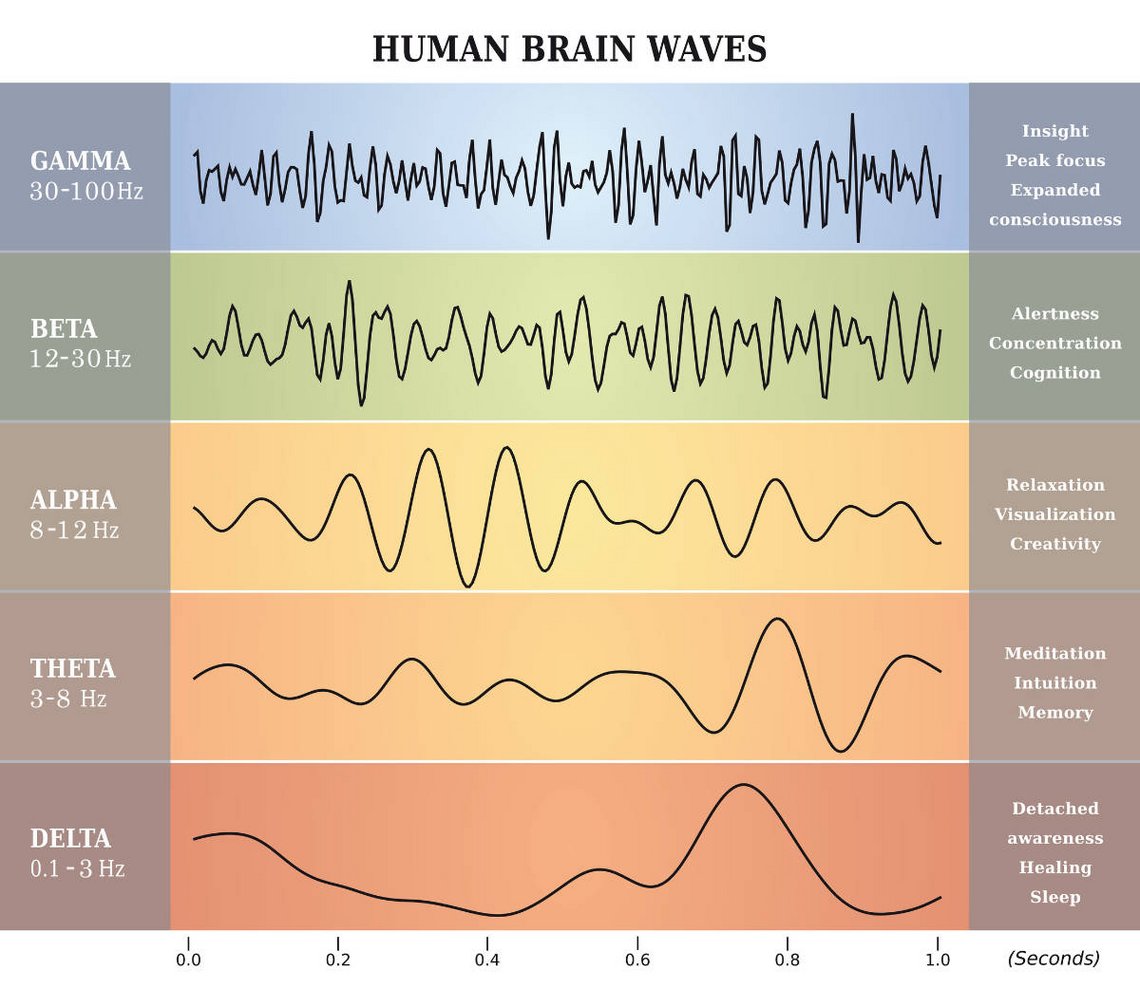
Brainwaves How your brain works

Brainwave Frequencies Explained

Set of brain waves oscillation. Beta, alpha, theta, delta, gamma brain

Brain Waves Frequency Chart
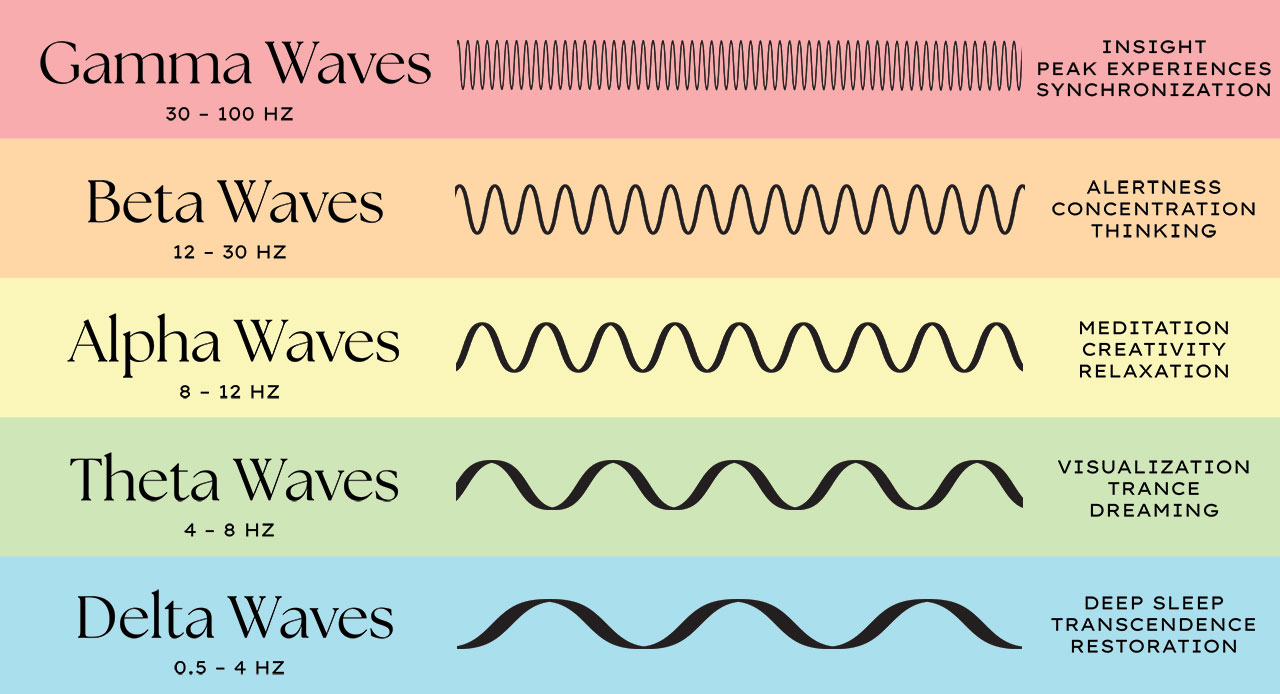
Understanding Brain Waves Beta, Alpha, Theta, Delta + Gamma
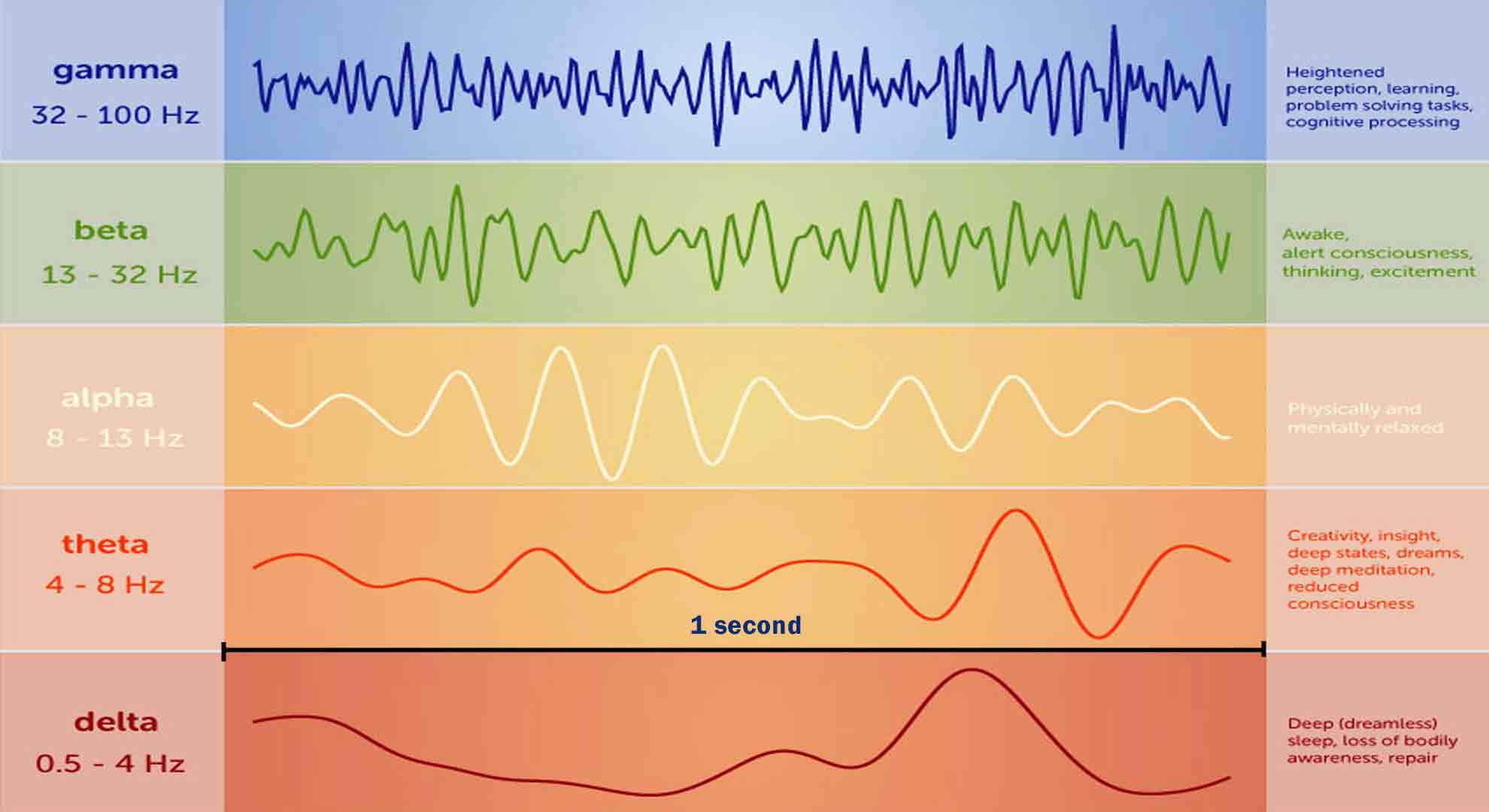
Brain Waves Chart

Human Brain Waves Diagram in Rainbow Colors with Explanations Alpha

Brain Waves Frequency Chart

Brainwave Frequencies Explained
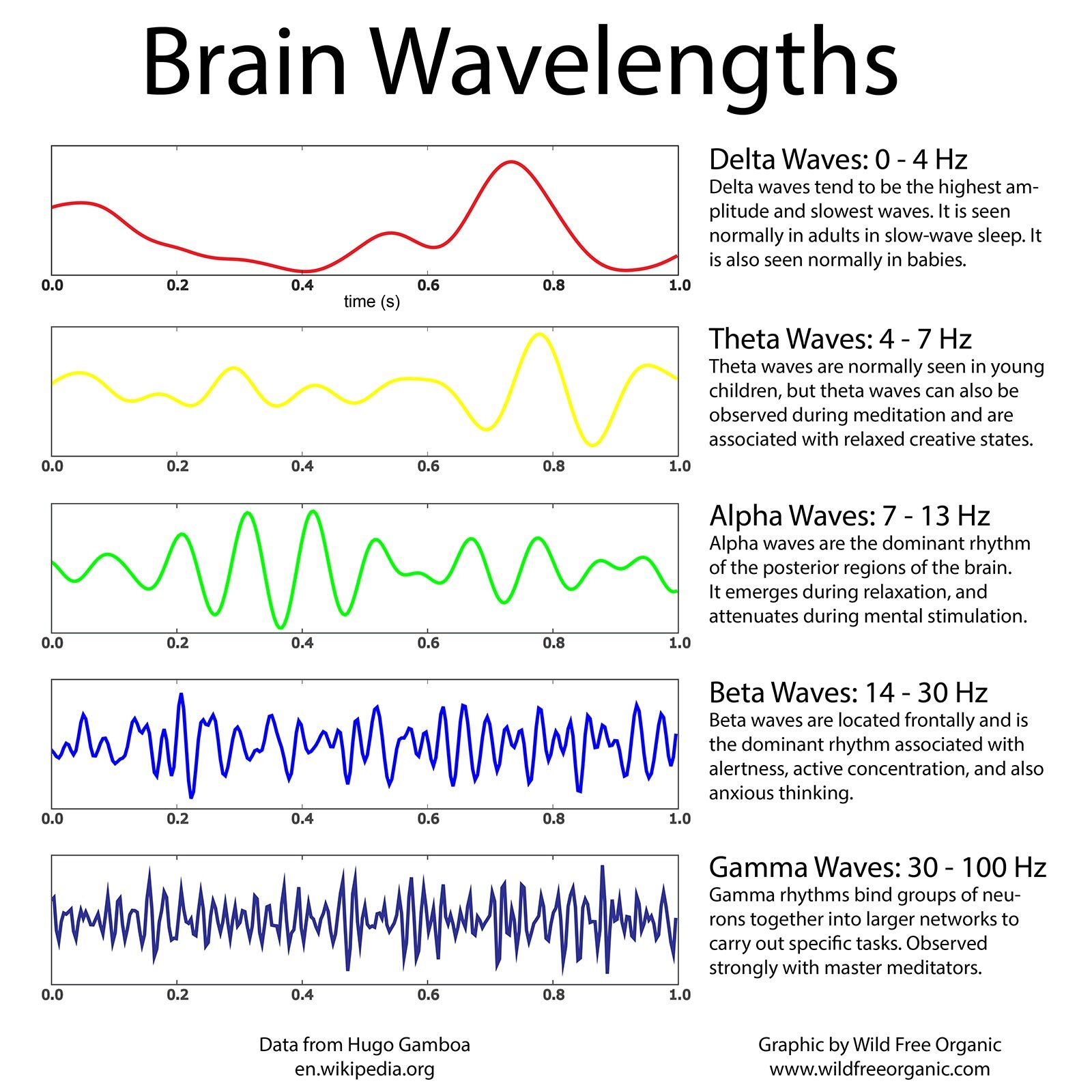
Brain Waves Frequency Chart
Dominant Brainwave In Infants Under One Year Old.
A Frequency Is The Number Of Times A Wave Repeats Itself Within A Second.
Web In Order Of Lowest Frequency To Higher, The Five Brain Waves Are:
By Amplifying The Brainwave Synchronization Effects, Deep Carrier Frequencies Allow You To Achieve A Far Deeper Level Of Meditation, Quickly, Safely And Easily.
Related Post: