
Possessive Nouns Anchor Chart
Possessive Nouns Anchor Chart - (see above.) • review the definition of a noun (names a person, place, thing, or idea). Noun anchor charts are a great way to teach students common, proper, compound, concrete, abstract, countable, uncountable, gerunds, singular, or plural nouns. One chart is about the three meanings of apostrophe s at the end of a word. Predicate adjectives are found in the predicate of a sentence. Students can easily access these posters during classroom activities. Web to set it up for this activity, set up three anchor chart papers on one side of the room and three on the other. 3 charts matching charts are included to explain the rules for singular, plural, and irregular plural nouns. Web this possessive nouns anchor chart is perfect for your wall! It doesn’t have to be pretty! Web if you are confused with where the apostrophe goes, this anchor chart will help. Web *possessive pronouns (e.g., her, my, our) can also answer which one. Web anchor charts these three anchor charts can be used to help students begin practicing the skill. For example, the chart can be a map of a text. The possessive nouns covered are singular possessive nouns and plural possessive nouns. Interactive anchor charts are a great way to introduce and teach possessive nouns. Web this is a handy chart to help explain the differences between singular nouns, singular possessive nouns, plural nouns, and plural possessive nouns. When it comes to getting possessive nouns to stick, exposure and repetitive practice are going to go a long way! For example, if you were talking about the tail of your cat, you could say cat’s tail. They follow state of being verbs like seems, looks, or feels. After the introduction, review the rules for punctuation with the students and provide more examples. For example, in the phrase the student’s notes, the word student’s is a possessive. Web anchor charts these three anchor charts can be used to help students begin practicing the skill. Web get inspired by these 29+ noun anchor charts. Fonts from kimberly santana/the learning tree. Review the examples on the anchor chart. Web the anchor chart i use to show kids what a possessive noun is, and how it is different from a plural noun. As a class, you will work on filling in the correct responses. For example, in the phrase the student’s notes, the word student’s is a possessive. I highly suggest creating an anchor chart for the different singular,. I highly suggest creating an anchor chart for the different singular, plural, and irregular possessive verb rules. When it comes to getting possessive nouns to stick, exposure and repetitive practice are going to go a long way! Noun anchor charts are a great way to teach students common, proper, compound, concrete, abstract, countable, uncountable, gerunds, singular, or plural nouns. See. Web these charts are great for introducing possessive noun rules to your students! This anchor chart is all made for you. Web if you are confused with where the apostrophe goes, this anchor chart will help. It doesn’t have to be pretty! Students will read the phrase and then write the possessive noun. • explain that nouns can be singular (only one) or plural (more than one). Concrete nouns and abstract nouns are included. Web if you are confused with where the apostrophe goes, this anchor chart will help. Web this anchor chart packet includes 9 different anchor charts covering nouns. Web 3rd grade possessive nouns anchor charts. Label one on each side “singular possessive nouns.” label one on each side “regular plural possessive nouns.” label the last one on each side “irregular plural possessive nouns.” Web anchor charts these three anchor charts can be used to help students begin practicing the skill. Web possessive nouns lexia lessons instruct anchor chart [display reproducible page 1.] • introduce the. See the pronouns 1 lesson for more information. For example, the chart can be a map of a text. The anchor charts include the definitions and a space for. Web possessive apostrophes are apostrophes (’) used with the letters at the end of a noun to show ownership over or a close connection with another noun. Web if you are. When it comes to getting possessive nouns to stick, exposure and repetitive practice are going to go a long way! Web possessive nouns lexia lessons instruct anchor chart [display reproducible page 1.] • introduce the concept of this lesson. Label one on each side “singular possessive nouns.” label one on each side “regular plural possessive nouns.” label the last one. Web get inspired by these 29+ noun anchor charts. This can be printed in multiple colors of the rainbow and that includes a b/w version as well. Web 3rd grade possessive nouns anchor charts. Anchor charts are great for this. Fonts from kimberly santana/the learning tree. Web get inspired by these 29+ noun anchor charts. Students will read the phrase and then write the possessive noun. Web possessives anchor charts. The anchor charts include the definitions and a space for. The possessive nouns covered are singular possessive nouns and plural possessive nouns. Fonts from kimberly santana/the learning tree. Review the examples on the anchor chart. Web we look at when to use the apostrophe s and when to only use and apostrophe. When it comes to getting possessive nouns to stick, exposure and repetitive practice are going to go a long way! The anchor charts include the definitions and a space for. • explain that nouns can be singular (only one) or plural (more than one). Use an anchor chart to show how nouns have a singular and a plural. The posters provided definitions and multiple examples for both categories. Web this anchor chart packet includes 9 different anchor charts covering nouns. 3 charts matching charts are included to explain the rules for singular, plural, and irregular plural nouns. Web possessive nouns lexia lessons instruct anchor chart [display reproducible page 1.] • introduce the concept of this lesson. For example, if you were talking about the tail of your cat, you could say cat’s tail. Label one on each side “singular possessive nouns.” label one on each side “regular plural possessive nouns.” label the last one on each side “irregular plural possessive nouns.” Predicate adjectives are found in the predicate of a sentence. After the introduction, review the rules for punctuation with the students and provide more examples. One chart is about the three meanings of apostrophe s at the end of a word.
Possessive Nouns Anchor Chart
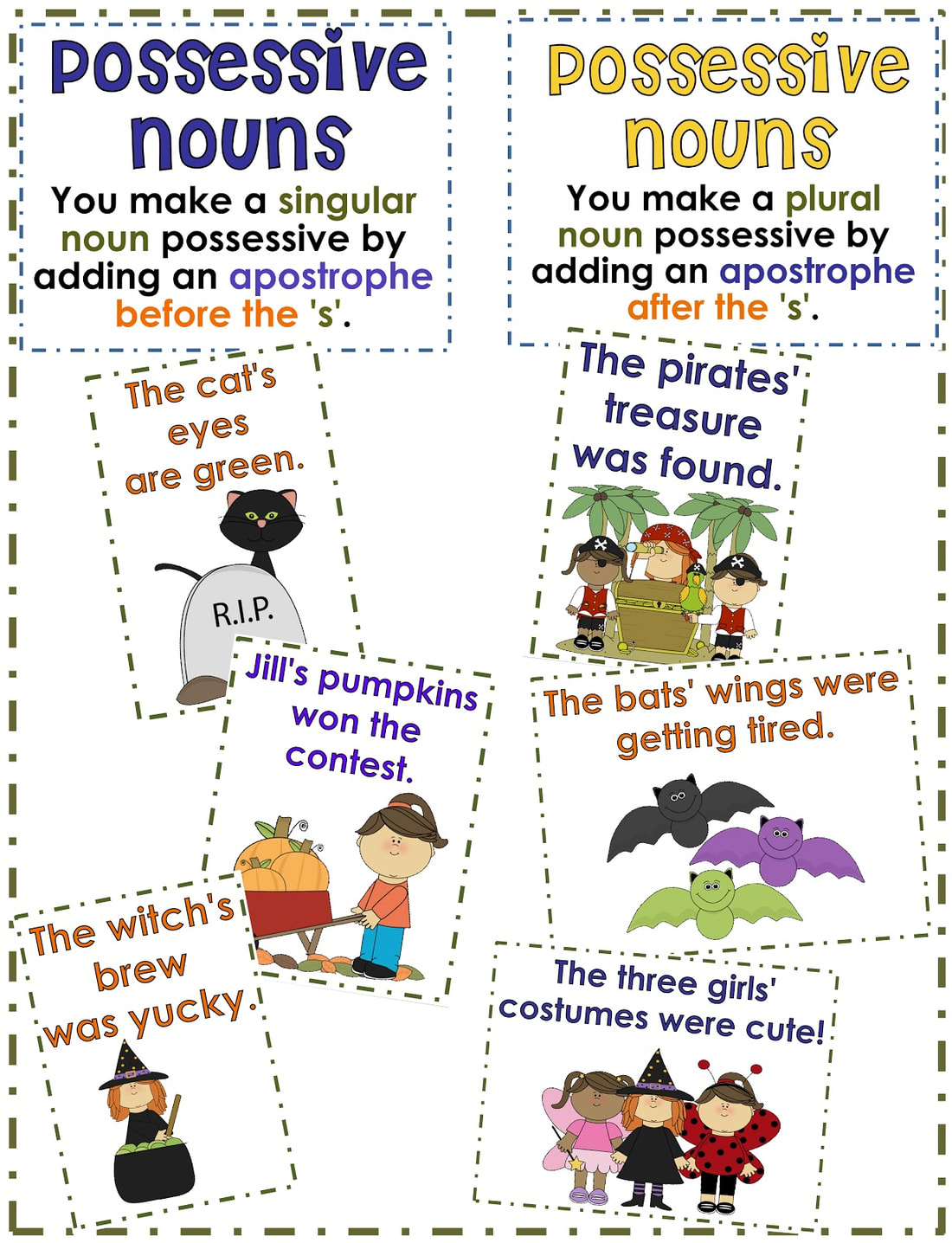
Possessive Nouns Anchor Chart THIRD GRADE LADYBUGS

Possessive Nouns Anchor Chart 2nd Grade

Possessive Nouns Anchor Chart (Joyfully Teaching in 2nd) Possessive

Possessive Nouns Anchor Chart image only Classroom anchor charts
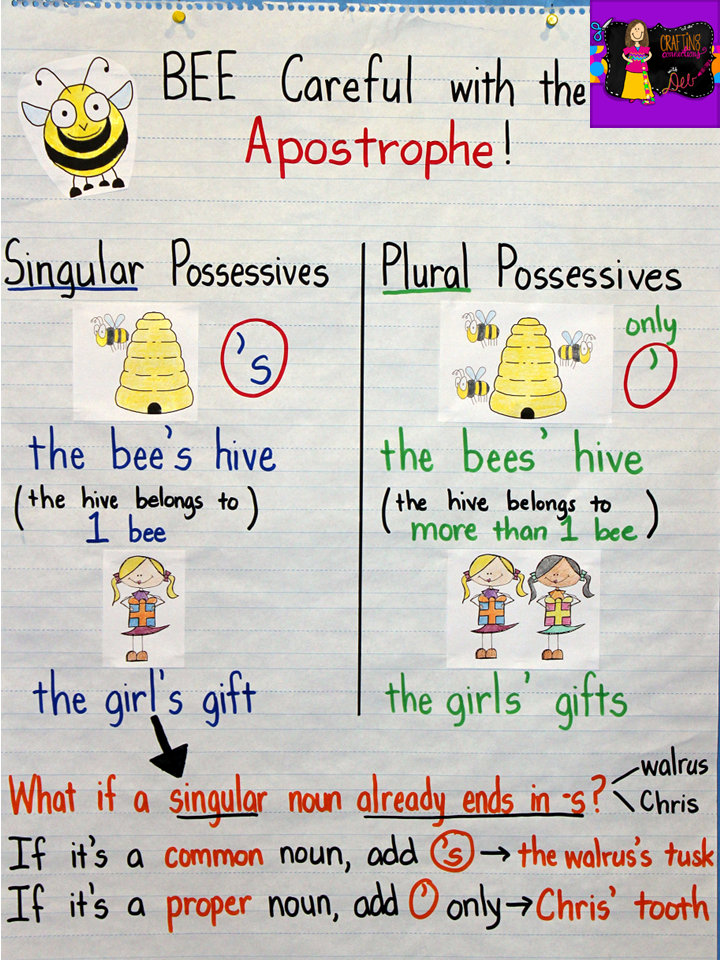
Singular and Plural Possessive Nouns Anchor Chart Crafting Connections
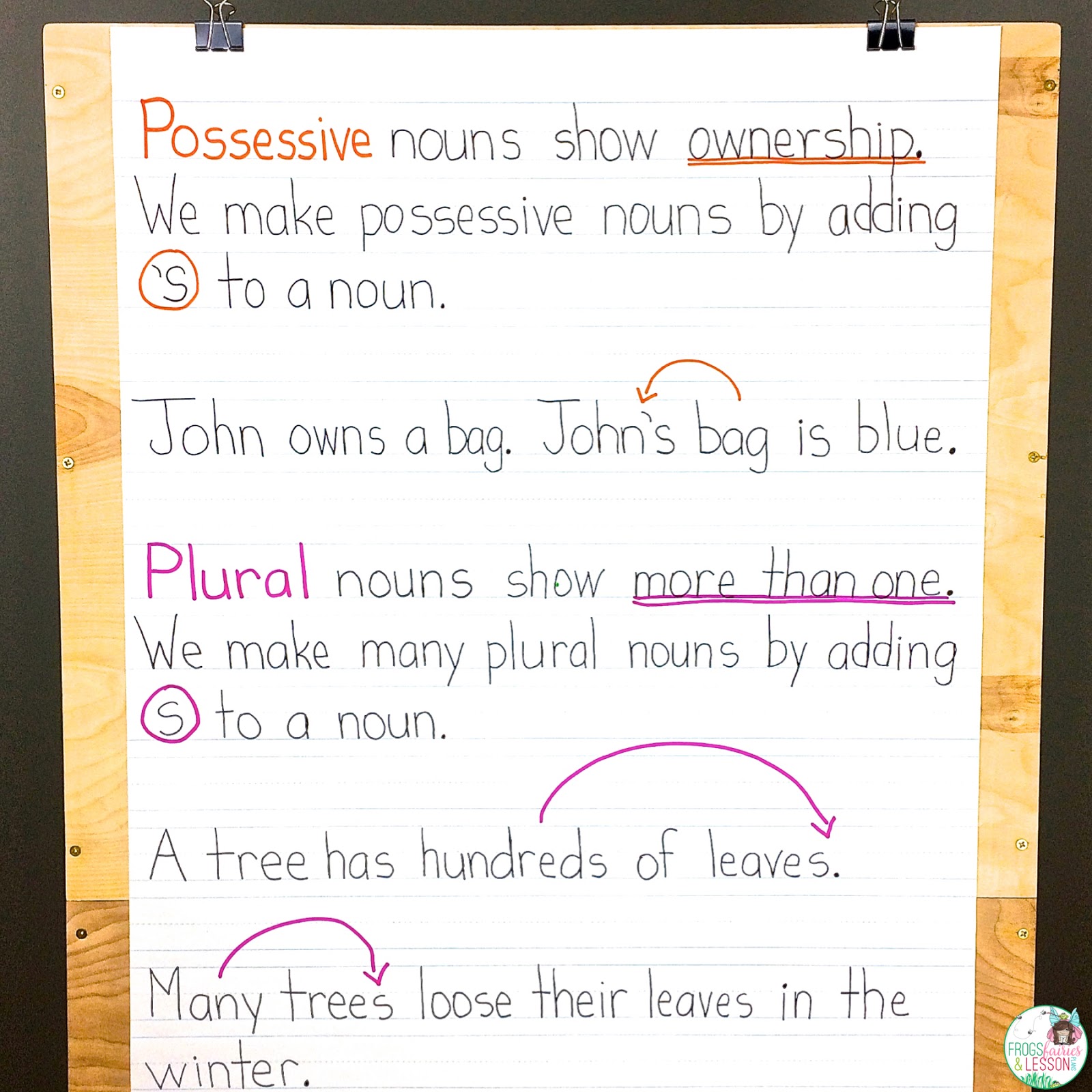
Frogs, Fairies, and Lesson Plans 5 Noun Lessons You Need to Teach in

Anchor chart for possessive nouns Possessive nouns, Anchor charts

Possessive Nouns Anchor Chart

3rd Grade Language Anchor Charts 37 Charts Anchor charts, Possessive
The Possessive Nouns Covered Are Singular Possessive Nouns And Plural Possessive Nouns.
See The Pronouns 1 Lesson For More Information.
Students Will Read The Phrase And Then Write The Possessive Noun.
For Example, In The Phrase The Student’s Notes, The Word Student’s Is A Possessive.
Related Post: